Friday, May 11, 2012

Coonskin (1975, Ralph Bakshi)


Coonskin.  What an ugly beautiful masterpiece.  Just as the later White Dog would be, it's an anti-racist film mislabeled and buried as racist.  I first saw this as a kid in '87 when it initially came out on video--as Street Fight--and had no idea what the hell I was watching.  Now, revisiting the film as an adult, via the belated DVD release from Xenon, I can see what a brilliant, ballsy film it is, not only within Bakshi's oeuvre, but within the overall 1970s canon.  Bakshi's film still stuns today because of the bluntness of its imagery, its willingness to portray ugly stereotypes in the interest of advancing its anti-racist message.  Bakshi's films are almost uniformly sloppy and unformed in parts, but here there is more focus and conviction, a more satisfyingly complete vision than in most of his other efforts.


An agitprop piece attacking the institutionalized and casual racism towards African-Americans in the South and New York City, Coonskin's story unfolds in a manner similar to Song of the South, which it critiques along with blaxploitation and crime films.  The narrative involves three Southern blacks--a rabbit, a bear, and a fox--who go to Harlem and proceed to take down the forces--sham preachers, corrupt cops, organized crime figures--who exploit the black community.  This story is shared with the audience by a convict (Scatman Crothers) who tells it to a fellow inmate (Philip Michael Thomas) as they wait to be broken out of the joint by his friends (Barry White and Charles Gordone).  Thomas, White, and Gordone are the live action counterparts to the heroes of the story, Brother Rabbit, Brother Bear, and Preacher Fox.


Of course, because it's largely animated it can show things that couldn't be done, and to an extent and level of exaggeration not possible, in live action.  In spite of its budget limitations, Coonskin's mixing of animation and live action is just as effective, if not more so, than later, higher-budgeted examples of this practice.  Bakshi's character designs, mixed with William A. Fraker's photography, capture the gritty, un-gentrified--alive--NYC of the late 1960s and '70s.  


This is another fine example of the seemingly boundary-less nature of the American cinema of the '70s and it's just unfortunate that the film was sabotaged by outside forces--particularly that opportunistic fraud Al Sharpton--who couldn't actually be bothered to watch the thing before condemning it.  Over the years, the film's reputation has been bolstered by critics and supporters such as Richard Pryor, Spike Lee, Quentin Tarantino, and the Wu-Tang Clan (who apparently, at some point, expressed interest in producing a sequel). 


Simultaneously, hilarious, gross, thrilling, sobering, and beautiful, Coonskin is eye-opening and provocative, but to a productive, useful end.  It's unfortunate that the new DVD, which boasts an impressive 16x9 transfer, has no extra features.  If ever a film cried out for some supplemental materials to provide some historical context, this would be one.


Sunday, May 6, 2012

Sunshine Noir


In an effort to shake things up a bit, I'm trying something new here.  With some help from my flatmate Clyde, I've finally started to learn some Final Cut basics and I've used those new found "skills," to construct a video essay of sorts.


Sunshine noir.  Swelter noir.  Yuppie noir.  Boomer noir.  For a few years, I've been thinking about some of the characteristics shared by several of my favorite neo-noirs of the early to mid-'80s and tried to attach a suitable moniker to this grouping.  I thought about writing an essay or article, but after a couple false starts, I realized constructing a short clip reel or video essay could be more effective and more fun.  The Cinefamily put together a series a couple years back calling some of these films, in addition to a few others, "Neon Noir."  For the record, I had already been thinking of my own "Sunshine Noir" series / article independent of the Cinefamily thing.


There is some crossover in these two strands, of course, but I think of these five films as being distinct from the Neon Noir sub-genre, which, incidentally, encompasses just about all of the cinematic antecedents to Nicolas Winding Refn's Drive.  Cinefamily's series came about a year before Drive and from what I understand, unfortunately, was not very well-attended.  Perhaps if it had coincided with the opening of Drive, it may have fared better.


Since I promised this wouldn't be a written essay, let's just go to the videotape and hope that it explicates things as effectively, or more so, than a written essay would.  Music is by Tangerine Dream, by the way.  "Love on a Real Train (Movie Version)" from Risky Business and "Igneous" from Thief.


Monday, March 12, 2012

Soundtrack Jukebox Vol. 3


A new Soundtrack Jukebox installment.

1. "Shake It" - Ian Matthews, Little Darlings
2. "To Look at You" - INXS, Reckless
3. "Ooh Child" - Valerie Carter, Over the Edge
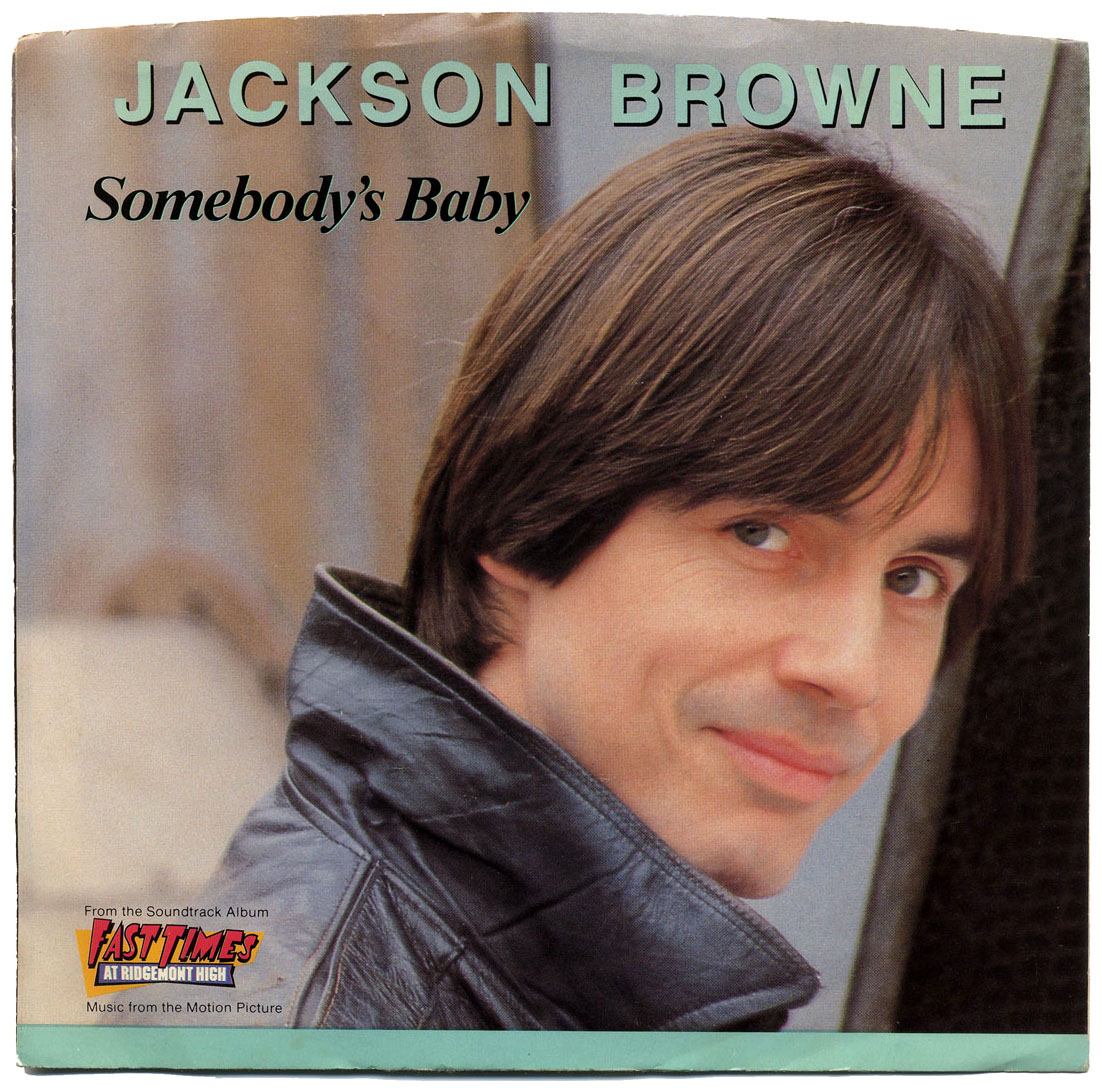
4.  "Somebody's Baby" - Jackson Browne, Fast Times at Ridgemont High
5. "Only the Young" - Journey, Vision Quest
6. "No Guarantees" - The Nobodys, Firstborn
7. "Feel Like a Number" - Bob Seger, Body Heat
8. "The House is Burning (But There's No One Home)" - Vivabeat, Body Double
9. "San Antone" - Denny Brooks, Rolling Thunder and The Ninth Configuration
10. "Girls Know How" - Al Jarreau, Night Shift
11. "Never Too Late to Start" - The Rod Temperton Beatwagon featuring Tommy Funderburk, Running Scared
12. "Summer Lovers" - Michael Sembello, Summer Lovers
13. "Un Ami" - Ennio Morricone (Daniel Beretta, vocal), Revolver

Thursday, February 9, 2012

"All he can think of is her shape."

Available on DVD since the beginning of the format, Vision Quest was one of a handful of titles that Warner Bros. issued in full-frame format only (there was later an Australian 16X9 DVD released under its alternate title Crazy For You). The Warner Archive has corrected this oversight by releasing a 16X9 VISION QUEST MOD DVD sourced from a newer master. They've also included the original theatrical trailer, which features the goofy, youthful, and lighthearted style of voiceover also utilized for other teen films of the era such as Fast Times at Ridgemont High.

Listening to the Vision Quest trailer a couple times, I believe the voice of the narrator belongs to Mark Metcalf, best known for his role as Lt. Douglas C. Neidermeyer in Animal House (which he reprised in the Twisted Sister video for "We're Not Gonna Take It" and in the John Landis-directed segment in Twilight Zone: The Movie) and less well known as one of the producers of, and actors in, Chilly Scenes of Winter aka Head Over Heels.

EDIT: An anonymous commenter suggests that the voice belongs to Rick Dees.  After listening to some samples of Rick's voice, and considering his history of using his voice for radio, music, and television, that would appear to be correct, though part of me thinks it would be cooler, or at the very least less conventional, if it were Metcalf behind the mic.

Wednesday, February 1, 2012

"Travis McGee is having a conference with one of his clients. Business as usual."

Rod Taylor, he of the recently revived Dark of the Sun (by way of Bill Lustig, Quentin Tarantino, and the Warner Archive), starred a few years later as Travis McGee, the most famous creation of mystery scribe John D. MacDonald, in Robert Clouse's Darker Than Amber.

That brings me to the latest acquisition resulting from my movie poster addiction, which you can see below.  I would have liked a more prominent image of star Rod Taylor rather than villain William Smith, but the garish colors and imagery make up for it.  Interestingly, Smith's name is nowhere to be found in the billing block.


This Belgian poster features the customary bi-lingual title treatment and sources its main images from a few other posters and lobby cards for the film.


Now, if only CBS, by way of Paramount, could see to it to release this on DVD or Blu-ray. Unfortunately, it's influence on Soderbergh's Haywire is probably too oblique to have much impact.

On another positive note, there has been recent talk of another screen interpretation of John D. MacDonald's Travis McGee.  The new adaptation, of the first McGee novel, The Deep Blue Good-by, has Leonardo DiCaprio attached as star and producer and Paul Greengrass as director.  My first reaction to hearing that DiCaprio is slated to topline was far from an enthusiastic "Yow!" response, but I guess it's best to take a "wait and see" approach.  That said, I know one thing...to borrow--and tweak--a line from the immortal Hank Kingsley: "One of Rod Taylor's balls is bigger than Leonardo DiCaprio."

I suppose if this thing ever gets made, CBS / Paramount would probably finally be inclined to release Darker Than Amber on a disc format, though.

Friday, December 30, 2011

11 Best Repertory Titles Seen for the First Time in '11


Rupert Pupkin is at it again!  He's been good enough to post my list of favorite repertory films seen for the first time in 2011.  I extended the list from the customary 10 to 11 to honor the year that was 2011 and because narrowing it down was as difficult as ever.

Friday, October 7, 2011

TV Spot(s) Not on the DVD: Summer Lovers (1982, Randal Kleiser)

These apparently aired on the then-nascent MTV in Summer '82.  I can't think of other TV spots that utilized actors and incorporated new scenes as this one does.  Can you?  I do, of course, recall the many TV spots that interviewed moviegoers as they exited a film or waited on line for tickets.